Sunday, May 16, 2010

ASEAN Secretariat - The Workers

Dr Surin (The Secretary General)
The ASEAN Secretariat has 51 openly recruited International Staff and 153 locally recruited personnel. They are headed by the Secretary General and four Deputy Secretaries General. The Secretary General is chosenbased on merit and appointed by ASEAN's head of govenrment and work for a term of five years. As for the Deputy Secretaries General, two of them are nominated by their governments and the other two are openly recruited and if chosen, they are to work for three years term. These four Deputy Secretaries General should come from four different ASEAN member states.

The Secretary General for the ASEAN secretariat at the moment , from the year 2008-2012, is
Dr. Surin Pitsuwan from Thailand.

For those people who are interested to work with the ASEAN Secretariat may look for any job vacancies in the internationally recruited professional ranks in ASEAN publications or simply on the ASEAN websites. Applicants should be of Asean nationals.

As for the locally recruited staff, these are only open for the ASEAN nationals resident in Indonesia.


P/S: Dr. Surin has an amazing profile. If you're interested to get to know him better, check out this website : http://www.aseansec.org/CV-SGSurin.pdf

Saturday, May 15, 2010

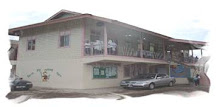
ASEAN headquarters


ASEAN Headquarters


The ASEAN headquarter is located at 70A Jalan Sisingamangaraja, Jakarta, Indonesia. The building was provided by the Indonesian Government. This is where the ASEAN Secretariat is located.

The ASEAN Secretariat was established after the signing of the Agreement on the Establishment of the ASEAN Secretariat on 24th February 1976. With the donation of this building made by the Indonesian government, the ASEAN Secretariat then get to have their own permanent headquarters on 9th May 1981 and was officially officiated by the then President of Indonesia, H.E Soeharto

ASEAN's working language

Everyone speaks English

According to the ASEAN Charter Article 34 :

The working language of ASEAN shall be English.

The working language of ASEAN is English. So, if the association was to conduct meetings, everyone should speak English. Even every reports, records, statements and all those which concerned interactions should be done in English. As an association, it has no translation or interpretation service. Therefore, the member states of ASEAN should step forward into the teaching of the English language to its people and that includes us. We should make our best effort to learn this language. We know that ASEAN member states consist of people speaking different languages. With us having a common language, which is English, will make it easier for us to communicate with each other as part of the ASEAN Community.

Thursday, May 13, 2010

Religion

Religions are diverse among the ASEAN member countries and not one country is homogenous.


Islam
Islam is the most widely practiced religion among the ASEAN. It is the official religion of Brunei, Indonesia, Malaysia. So, majorities of Muslims are from these three countries. Indonesia is known to have the largest Muslim population not just among the ASEAN members but the whole world. Malay Islamic Monarchy (MIB) is the ideology uphold in Brunei. Eventhough they are non-Muslims in Brunei, it is illegal to spread religions other than Islam in the country. Majority people are Muslims in Brunei. However, in Thailand, the Muslims are the minority population. In the Philippines, most Muslims come from Mindanao and Sulu Islands. There are also some Muslims in Myanmar. Meanwhile in Singapore, the largest minority is the Muslim people.


Christianity
This religion can be found throughout Southeast Asia. Among the ASEAN member countries, Christianity is predominant in the Philippines and this is followed by Vietnam.


Buddhism
Thailand, Cambodia, Laos, Myanmar are the countries in ASEAN which practiced this religion predominantly. Some Singaporeans and Vietnamese also practise Buddhism. It is the second most practiced religion after Islam in ASEAN.


Hinduism
Hinduism is one of the main religion of Cambodia and Laos. Angkor Wat which is in Cambodia is the largest Hindu temple in the world. In Indonesia, Hinduism is very dominant in Bali. A number of Hindus can also be found in Thailand.

Friday, April 9, 2010

ASEAN Currency (Part 2)

Myanmar
Currency : Kyat

Singapore
Currency : Singapore Dollar

Thailand
Currency : Baht

Vietnam
Currency : Dong

ASEAN Currency (Part 1)

Brunei Darussalam
Currency : Brunei Dollars

Cambodia
Currency : Riel

Indonesia
Currency : Rupiah

Laos
Currency : Kip

Malaysia
Currency : Ringgit

Maps of Member States of ASEAN (Part 2)

A Map of Myanmar
FACTS AND FIGURES
Official Name : The Union of Myanmar
Capital : Yangon (Rangoon)
Area : About 676 578 square kilometres
Population : About 50, 020 000 (in 2009)
Official Religion : Buddhists
Official Language : Burmese
Location : In Southeast Asia, lies between Bangladesh to its west, India and China to the north and Laos and Thailand to the East
Climate : Tropical climate with three seasons; rainy, cool and hot season
System of Government : Military junta (de facto Military Dictatorship)

A Map of The Philippines
FACTS AND FIGURES
Official Name : The Republic of the Philippines
Capital City : Manila
Area : About 299 764 square kilometres
Population : About 91, 983 000 (in 2009)
Official Religion : Christians
Official Language : Filipino Tagalog and English
Location : In Southeast Asia and in the western Pacific Ocean
Climate : Tropical Climate with rainy season
System of Government : Unitary Presedential Constitutional Republic

A Map of Singapore
FACTS AND FIGURES
Official Name : The Republic of Singapore
Capital : Singapore
Area : About 710.2 square kilometres
Population : About 4,608 167 (in 2008)
Official Religion : Mixed races and therefore there it has a number of religions;Islam, Buddhism, Hinduism etc.
Official Language : Malay, Mandarin, English and Tamil
Location : In the southern tip off the Malay Peninsula
Climate : Equatorial climate, mostly hot and humid and also wet.
System of Government : Parliamentary Republic

A Map of Thailand
FACTS AND FIGURES
Official Name : The Kingdom of Thailand
Capital : Bangkok
Area : About 513 120 square kilometres
Population : About 63, 525 062 (in 2010)
Official Religion : Buddhists
Official Language : Thai
Location : In Southeast Asia, bordered by Cambodia and Laos tothe East, Burma and Laos tothe north, Malaysia to the south and by the Andaman Sea and the southern extremity of Burma to the west.
Climate : Tropical climate with dry and wet season
System of Government : Parliamentary Democracy and Constitutional Monarchy

A Map of Vietnam
FACTS AND FIGURES
Official Name : The Socialist Republic of Vietnam
Capital : Hanoi
Area : About 331 690 square kilometres
Population : About 88, 576 760 (in 2009)
Official Religion : Buddhists
Official Language : Viatnamese
Location : Easternmost country on the Indochina Peninsula in Southeast Asia
Climate : Varies from north to south
System of Government : People's Republic, Communist Single Party State

Maps of Member States of ASEAN (Part1)

A Map of Brunei Darussalam
FACTS AND FIGURES
Official Name : Negara Brunei Darussalam (Abode of Peace)
Capital : Bandar Seri Begawan
Area : 5,765 square kilometres
Population : About 388 190 (in 2009)
Official Religion : Islam
Official Language : Malay (but English is also widely spoken)
Location : In Southeast Asia on the northern coast of Borneo
Climate : Tropical Climate, generally hot, humid and rainy
System of Government : Constitutional Monarchy (Sultanate)

A Map of Cambodia
FACTS AND FIGURES
Official Name : The Kingdom of Cambodia
Capital : Phnom Penh
Area : 181 035 square kilometres
Population : about 14, 241 640 (in 2008)
Official Religion : Buddhists
Official Language : Khmer
Location : In Southeast Asia, on the Indochinese Peninsula, bordered on the northwest by Thailand.
Climate : Tropical Humid Climate, rainy and dry season
System of Government : Multiparty Liberal democracy under monarchy

A Map of Indonesia
FACTS AND FIGURES
Official Name : The Republic Of Indonesia
Capital : Jakarta
Area : About 7.9 million square kilometres
Population : About 237, 512 352 (in 2008)
Official Religion : Islam
Official Language : Bahasa Indonesia
Location : In Southeast Asia between the Indian Ocean and the Pacific Ocean
Climate : Almost entirely tropical climate (hot and humid all year round, but cooler inland than along the coastal regions)
System of Government : A Republic with a Presidential System

A Map of Laos
FACTS AND FIGURES
Official Name : Lao People's Democratic Republic
Capital : Vientiane
Area : About 236 800 square kilometres
Population : About 6, 667 534 (in 2008)
Official Religion : Buddhist
Official Language : Lao
Location : in Southeast Asia bordered by Cambodia, Thailand, Myanmar, China and Vietnam.
Climate : Tropical Monsoon Climate (rainy season and dry season)
System of Government : Socialist Republic, Communist Single Party State

A Map of Malaysia
FACTS AND FIGURES
Official Name : Malaysia
Capital : Kuala Lumpur
Area : About 329 845 square kilometres
Population : About 28, 310 000 (in 2009)
Official Religion : Islam
Official Language : Bahasa Melayu
Location : In Southeast Asia, consists of the Malaysian Peninsula and the states of Sabah and Sarawak on the island of Borneo
Climate : Tropical, humid climate
System of Government : Federal Constitutional Elective Monarchy and Parliamentary Democracy

"Let Us Move Ahead" Song

Song Title : Let Us Move Ahead

Composed by : Candra Darusman (Indonesia)

Lyrics by : Rizali Indrakesuma (Indonesia)

Arrangement : Erwin Gutawa (Indonesia)

Another ASEAN song. Let's spread the feeling of unity among us. Have a listen to the lyrics of this song, and it'll definitely uplift your spirit to strive upon the vision of ASEAN for an establishment of an ASEAN Community by 2015. Most of you might not have heard of this song yet. So, with this song posted in this blog, it is hope that you will share the song with others and make this song well-known not just in ASEAN but also in other parts of the world.

Lyrics of the song :

Throughout these years

We have resolved working hard together,

For a true community,

The beauty of diversity,

Bridging all the differences,

A sense of unity.

(Chorus)

Let us move ahead,

Hand in hand as one,

Let ourvirtue stand,

And face the challanges of time,

Let us move ahead,

Integrate as one,

To an ASEAN community,

Prosperity, peace and harmony.

The future is ours,

We have the strength,

We shall find the peace,

Within ourselves and with the world,

And as we strive in our resolve,

Sharing this one vision of a true community,

*Repeat Chorus

Throughout these years,

We have resolved working hard together,

For a true community,

The beauty of diversity,

A sense of unity.

*Repeat Chorus 2x.

ASEAN Community by 2015

Eventhough it still seems so far reaching to establish ASEAN Community by 2015 (that's another five years to go), we should try our best to make it a reality. It is of course a complex matter, since there are some obstacles, besides a whole lot of differences in terms of culture and religious matters of its member countries.

It is hope that by watching this video, you will understand and be more conscious of your obligations in building the ASEAN Community.

ASEAN National Flowers (Part 2)

Myanmar
'The Paduak' (Pterocarpus Indicus)
Features:
*The people of Myanmar regard this flower as a symbol of strengh and durability.
*As beautiful as it is, it also suggests youth, love and romance.
* It plays important roles both in religious and traditional occassions.
*Can be seen everywhere in Myanmar.
*The wood of this plant is used to make furnitures.

The Philippines
'The Sampaguita Jasmine' (Arabian Jasmine)
Features:
* Adopted officially as the National flower of the Philippines in 1934.
*It blooms for the full year.
*It is a star-shaped white flower.
*It has a sweet and unique smell and at night the flowers open.
*The flowers can wilt in a day.
* The flower represent the Filipino people as purity, simplicity, humility and strength.

Singapore
'Vanda Miss Joaquin'
Features:
*Singapore has adopted this flower as its National Flower in 1981.
* The most common type of flowers planted in Singapore.
*It is a mixture of one flower with another (hybrid)
*It is named after its breeder.
The flowers are purple and they bloom throughout the year.

Thailand
'The Ratchaphruek' (Cassia Fistula Linn)
Features:
* It is a well-known flower in Thailand.
*It is cluster-shaped.
*The colour of the flower, which is yellow is regarded as the colour of Buddhism and glory.
*The flower also represent unity and harmony of the Thai people.
*When blossoming, the leaves will shed off from the tree, while the beautiful yello flowers would hang on its branches.
*Can be found everywhere in Thailand.

Vietnam
'The Lotus'
Features:
*Also known as the 'Flower of the Dawn'.
*Can be found in the lakes and ponds.
*It symbolises the purity, commitment and optimism for tomorrow.
*The beauty of this flower is often mentioned in the Viatnamese folk songs and poems.

ASEAN National Flowers (Part 1)

Brunei Darussalam
'The Simpur' (Dillenia Suffroticosa)
Features :
*It has five, yellow and large petals.
*The leaves arelarge.
* When blossom, it spread out like an umbrella.
* The picture of this simpur can be seen in the Brunei dollar bank note.
* It can usually be seen in the art and design for traditional handicrafts.
*Can also be of medicinal used.

Cambodia
'The Rumdul' (Mitrella Mesnyi)
Features :
*The colour of this small flower is yellowish white.
* It has a nice smell especially in the evening.
*This flower used to be compared to the women of Cambodia in the past.
*Can be seen everywhere in the country.

Indonesia
'The Moon Orchid' or 'Anggerek Bulan' (Phalaenopsis Amabilis)
Features:
*Indonesia has three National Flowers and this is one of them.
*Jasminum Sombac (Melati) and Rafflesia Arnoldii are the other two flowers.
*The Moon Orchid usually blooms in the moist area, and therefor this plant can usually be found in the lowland parts of Indonesia.

Laos
'The Dok Champa' (Plumeria)
Features:
*The flower has a sweet scent.
*It comes in many different colours; red, yellow, pink and multiple pastels.
* It blooms everyday and can last for a long time.
* The people of Lao represents this plant as sincerity and joy of life.
* The flower is usually used in a celebrations for decorations and can be made as a garland to welcome the guests.

Malaysia
'Bunga Raya' (Hibiscus Rosa-Sinensis)
Features:
*Bunga Raya is officially adopted as Malaysia National Flower since 1960.
*The flower has five petals and this is referred as the 'Five Principles of Nationhood'.
* The flower is red in colour and this shows courage.
*It can be found almost everywhere in Malaysia.
*The plants can be make use for comestic as well as medicines.

Thursday, April 8, 2010

National Flowers

The tradition of having to own National flower is not just applied by the ASEAN member states but also other countries. Nation chose their flowers according to some important criterias. It may be rooted from the historical background of the country or from the cultural and religious beliefs.

Some countries may have one national flower, however, other countries like Indonesia and Vietnam have more than one national flowers.

It is important to point out that not all national flowers are officially adopted as the nation's national flower.

The chosen national flower or flowers is/are then used to represent the country.

Wednesday, April 7, 2010

Head of State and Head of Government of the Member States of ASEAN (Part 2)

Tuesday, April 6, 2010

Head of State and Head of Government of the Member States of ASEAN (Part 1)


Monday, March 15, 2010

National Anthem of Vietnam

Song Title : "Tien Quan Ca" ("March tothe Front")

Lyrics : Ngu Yen Van Cao

Music : Ngu Yen Van Cao

Ngu Yen Van Cao, who was a writer and a composer wrote this song in the year 1944. When the song was pubished in the newspaper, the song had a positive feedback from the public. In 1946, the provisional government adopted this song as the national anthem of North Vietnam. When North Vietnam was unified with South Vietnam in the year 1976, this song became the anthem of the whole Vietnam. The song was actually written in two verses. However, only the first verse is used as the official anthem of Vietnam.

Translations of the Lyrics in English

Armies of the Vietnam, forward!,

With one single determination to save our Fatherland,

Our hurried steps resound on a long and arduous road,

Our flag, red with blood of victory, bears the spirit of the country,

The distance rumbling of the gund mingles with our marching song.

The path of glory is built by the bodies of our foes,

Overcoming all hardships, together we build our resistance bases.

Ceaselessly for the People's cause let us struggle,

Let us hasten to the battlefield!

Onward! Altogether advancing!

For one eternal Vietnam.

National Anthem of Thailand

Song Title : "Phleng Chat" ("National Anthem of Thai")

Lyrics: Luang Saranuprapan

Music : Phra Jenduriyang

Thailand had changed it's national anthem for more than three times. This is the current National Anthem of Thailand. The first anthem was first raised when the King paid a visit to the British colony of Singapore and found out that British has its own national anthem and thought that Thailand should have one too. So, the first anthem was introduced and it was unpopular. Even the second and third anthems were short lived. Finally, this anthem remained the anthem of Thailand until today. It was adopted on 10th December, 1939. The anthem was to be played everyday at 8 in the morning and 6 in the evening while the flag is raised and lowered.

Translations of the Lyrics in English

Thailand unites flesh and blood of Thais,

Nation of the people ; belonging to the Thais in every respect,

Long maintained [has been] the independence,

Because the Thais seek, and love, unity,

Thais are peace loving,

But at war we're no cowards,

Sovereignty will not be threatened,

Sacrificing every drop of blood for the nation,

Hail the nation of Thailand, long last the vistory, Chai yo (cheers)

National Anthem of Singapore

Song Title : "Majulah Singapura" ("Onward Singapore")

Lyrics : Zubir Said

Music : Zubir Said

Zubair Said was asked to compose this song and was given a title "Majulah Singapura" as the theme of the song beforehand. It took him a year to complete it and the song was used for the Council's official function in 1958. In 1959, when Singapore attained it's independence, they felt the need to have their own anthem. So, this song was selected as it was a popular song at that time and the lyrics were then revised. The song officially became the National Anthem of Singapore on 9th August 1965, after Singapore gained its full independence. There are laws on the usage of this anthem and if not obeyed, will be penalised. For example, the song is to be sung in Malay only, although there is an authorisation in the translation of the anthem in English, Mandarin and Tamil.

Translation of the Lyrics in English

Come, fellow Singaporeans,

Let us progress towards happiness together,

May our noble aspiration bring Singapore success,

Come, let us unite in a new spirit,

Let our voices soar as one,

Onward Singapore,

Onward Singapore.

National Anthem of Myanmar

Song Title : "Kaba Ma Kyei" ("Till The End Of The World, Burma")

Lyrics : Saya Tin

Music : Saya Tin

This song was established as the National Anthem of Myanmar in 1947. It is the only ASEAN country that used an anthem embedded from its own indigineous customs.

Translation of the Lyrics in English

Until the world ends up shattering, long lives Burma!

We love our land because this is our real inheritance.

We will sacrifice our lives to protect our country,

This is our nation, this is our land and it belongs to us,

Being our nation and our land, let us do good causes to our nation in unity!

And, this is our very duty to our invaluable land

National Anthem of the Philippines

Song Title : "Lupang Hinirang" ("Chosen Land")

Lyrics : Jose Palma

Music : Julian Felipe

When this song was adopted as the Philippine National Anthem in 1898, this song had no lyrics. A poem wrote by Jose Palma in Spanish then was used for the song lyrics. When the Americans occupied Phillipines, it later changed the lyrics into an English version and was called 'Phillippine Hymn'. In the 1940s, again, the song was translated into Tagalog. This song had been called by so many names in Tagalog. At last, in 1960s, the National Anthem was revised and the lyrics were changed into the Pilipino, standardised Tagalog version which is used until now. There is a law where the Philippine National Anthem shall be sung in its national language within or outside the country and as for those who violates it will face imprisonment and fines.

Translation of the Lyrics in English (unofficial)

Beloved country,

Pearl of the Orient,

The burning [fervour] of the heart,

In thy chest beats ever alive.

Chosen land,

Thou art the cradle of the brave,

To the conquerors,

Thou shall never surrender.

In the seas and mountains,

In the air and in the azure sky,

There is a splendour in the poem,

And [in the song] for the freedom beloved.

The sparkle of thy flag,

Is victory that shines,

Its stars and sun

Forever shall never dim.

Land of the sun, of glory and our love,

Life is heaven in thy embrace;

It is our joy when they are oppressors,

To die because of thee.